
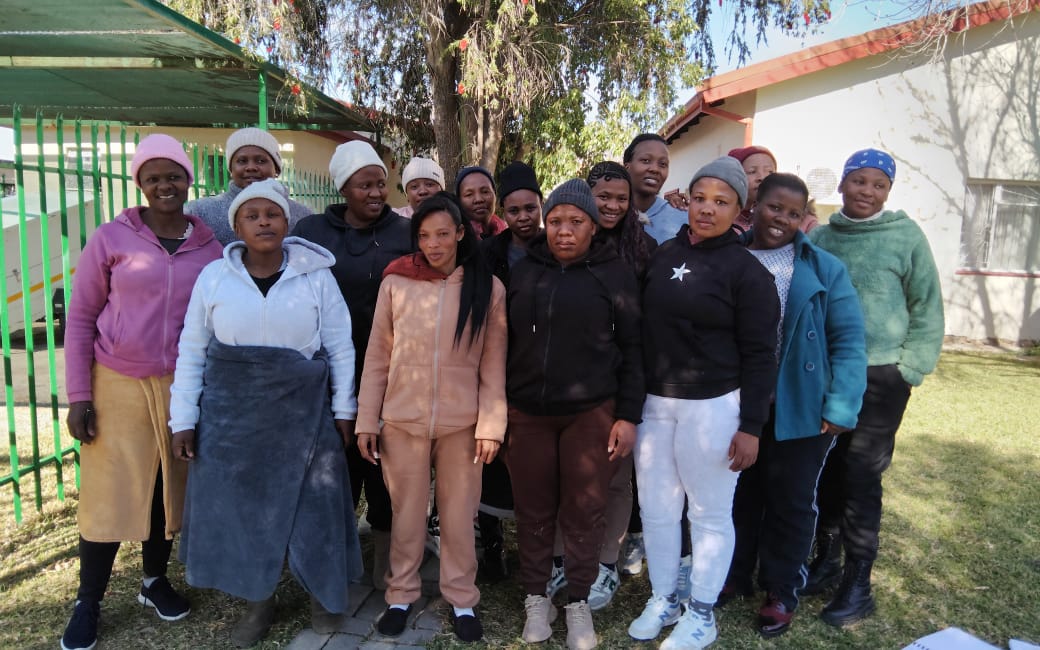
The future of young children in Boshof and Hertzogville is set to benefit from an investment in those who care for and teach them. Fifteen Early Childhood Development (ECD) practitioners have embarked on a two-year training programme that will equip them with nationally recognised qualifications and practical skills in line with government standards. Beyond empowering the practitioners themselves, the programme will help improve the quality of early learning for hundreds of children each year, laying stronger foundations for education and long-term community development.
ECD is widely recognised as one of the most effective ways to improve educational outcomes and lay the foundation for lifelong learning. In line with the Children’s Act, the Department of Basic Education recognises ECD practitioners as central to strengthening the quality of early learning, making investment in their professional development essential.
“This training is a chance to gain new skills and knowledge so I can support children better. I believe it will deepen my understanding of child development, give me ideas for activities and ways to manage classroom dynamics,” shared Tomeletso Diphoko, one of the practitioners benefiting from this training programme, which is funded by Boshof Solar Power.
With the accredited course content provided by Sol Plaatje University, training follows a blended learning model, comprising one week of theory and three weeks of practical placement each month over a two-year period. Delivered by training and development specialist, Custoda, this approach is designed to equip practitioners with both accredited qualifications and hands-on classroom experience, strengthening the quality of teaching and care during the foundational years.
“It is important for our support to be holistic, attending to the needs of our beneficiary ECD centres across the board,” shared Noluthando Mazibuko, Economic Development Specialist at Boshof Solar Power.“ The six-year partnership between Boshof Solar and Custoda has enabled the programme to extend beyond practitioner training, creating broader opportunities for skills development and community impact. It funds infrastructure upgrades, governance and first aid training, and continuous mentorship, strengthening practitioner capacity and improving the overall quality of teaching, learning and care at local ECD centres.
Another one of the new trainees, Baruledi Maritshe who has worked in ECD for 15 years, added, “Currently working at Oarabile Disability Centre, I look forward to how this training will help me to identify children that require extra support, ensuring I have a positive impact on their learning journey.”
Consistent year-on-year investment is central to the programme’s success. By continuously strengthening practitioner skills, supporting ECD centres and responding to evolving community needs, the initiative helps create sustainable improvements in school readiness, early learning outcomes and children’s long-term development.