In classrooms across the Ramotshere Moiloa Local Municipality area, learners who once struggled to see are now keeping up with their lessons. Follow-up research shows that more than half of the learners who received free prescription spectacles through the Mobile Health Programme have shown measurable improvements in their school performance.
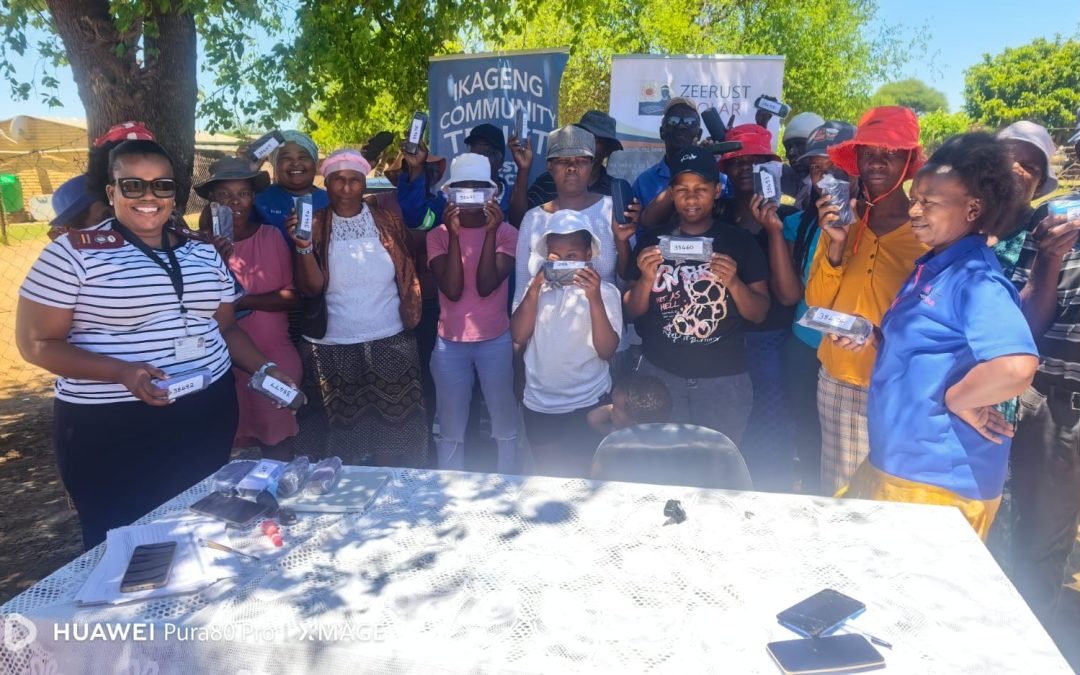
Funded by Zeerust Solar in partnership with Innovo Mobile Health, the programme helps children who struggled to read the board, follow lessons and keep up in class because of vision problems that often went unnoticed.
Since 2021, the programme has brought essential healthcare closer to the communities that need it, where services such as optometry and dental care can be difficult to reach. By bringing vision screening and prescription spectacles to learners, it helps teachers, parents and caregivers identify eyesight problems early, so children can take part fully in school and in their futures.
“Every child deserves the opportunity to learn and reach their full potential. By providing access to vision screening and prescription spectacles, we are helping address a problem that can affect learners’ confidence and school performance,” said Qinisani Siveshe, Social Performance Manager for Zeerust Solar.
Since the programme began, 486 pairs of prescription spectacles have been provided free of charge to learners, educators and community members. Of the 854 eye conditions identified, 587 were addressed with prescription spectacles, reducing the need for further treatment at public healthcare facilities.
This year alone, 317 people received eye screenings, and 36 pairs of spectacles were issued. The programme also provides eye care to adults and older people who may have limited access to local optometry services.
“The value of the programme is in bringing healthcare closer to the people who need it. For many learners and community members, accessing services at a local clinic or hospital can be difficult because of distance, operating hours or long waiting periods. By taking the mobile clinic directly to schools and communities, we can identify problems earlier and, where possible, treat them on site,” added Siveshe.
Learners also receive health education on topics such as nutrition, bullying, substance abuse, teenage pregnancy and water safety. BMI screenings and nutritional counselling further encourage healthier choices.
Beyond eye care, the programme provides a range of primary healthcare, dental and health education services. To date, it has reached 6,075 people, delivered 25,506 healthcare services and referred 936 people for further treatment. By bringing screening and treatment closer to communities, the mobile clinic helps address gaps in healthcare access while reducing pressure on public facilities.